Loading...
Serving Hudson, NH and surrounding areas. (603) 471-5233
Hudson's frost line sits at 48 inches. Footings that do not reach that depth will shift, and the deck or addition above them will too. We pour concrete footings in Hudson built to code and inspected before the concrete goes in.
Concrete footings in Hudson, NH are the underground concrete base that supports a deck, addition, porch, or detached structure - dug to at least 48 inches below grade to clear the frost line, formed, poured, and inspected before any framing begins, with most residential jobs completed in one day of active work followed by a seven-day minimum cure.
A footing is not visible once the project is finished, which is exactly why it matters so much. If it is poured too shallow, every freeze-thaw cycle in a New Hampshire winter will push it up a little further, and after a few years the deck or addition above it will show the results - gaps opening at the house, doors that no longer close, cracks running along slab edges. Hudson's housing stock includes a large share of homes built between the 1970s and 1990s, and footings from that era were sometimes poured shallower than what current code requires.
If the project involves a full basement or crawl space rather than just isolated footings, our foundation installation service covers the complete foundation system - walls, waterproofing, and the footing work underneath it all.
If you can see a gap opening between your deck and the exterior wall, or the deck surface has started to slope noticeably, the footings underneath may have shifted. In Hudson, this often happens after a harsh freeze-thaw winter when footings that were not dug deep enough get pushed up by the freezing ground and do not settle back to their original position.
Cracks that radiate from corners or run along the edges of a concrete slab are often a sign that the footing or base underneath has moved. This is especially common in Hudson's older neighborhoods, where slabs poured in the 1970s and 1980s may have been set on footings that did not account for today's frost depth requirements.
Walk around your deck and look at where the posts meet the ground. If they rest on thin concrete pads sitting on top of the soil rather than on posts anchored to footings dug deep into the ground, those footings are almost certainly not deep enough for Hudson's frost line. This is a common finding on decks built before stricter local requirements were in place.
When a footing shifts, the structure above it moves too - and that movement often shows up first as doors or windows that suddenly do not open and close properly. If you have noticed this in a room that was added to the original house, it is worth having a contractor look at the footings under that addition.
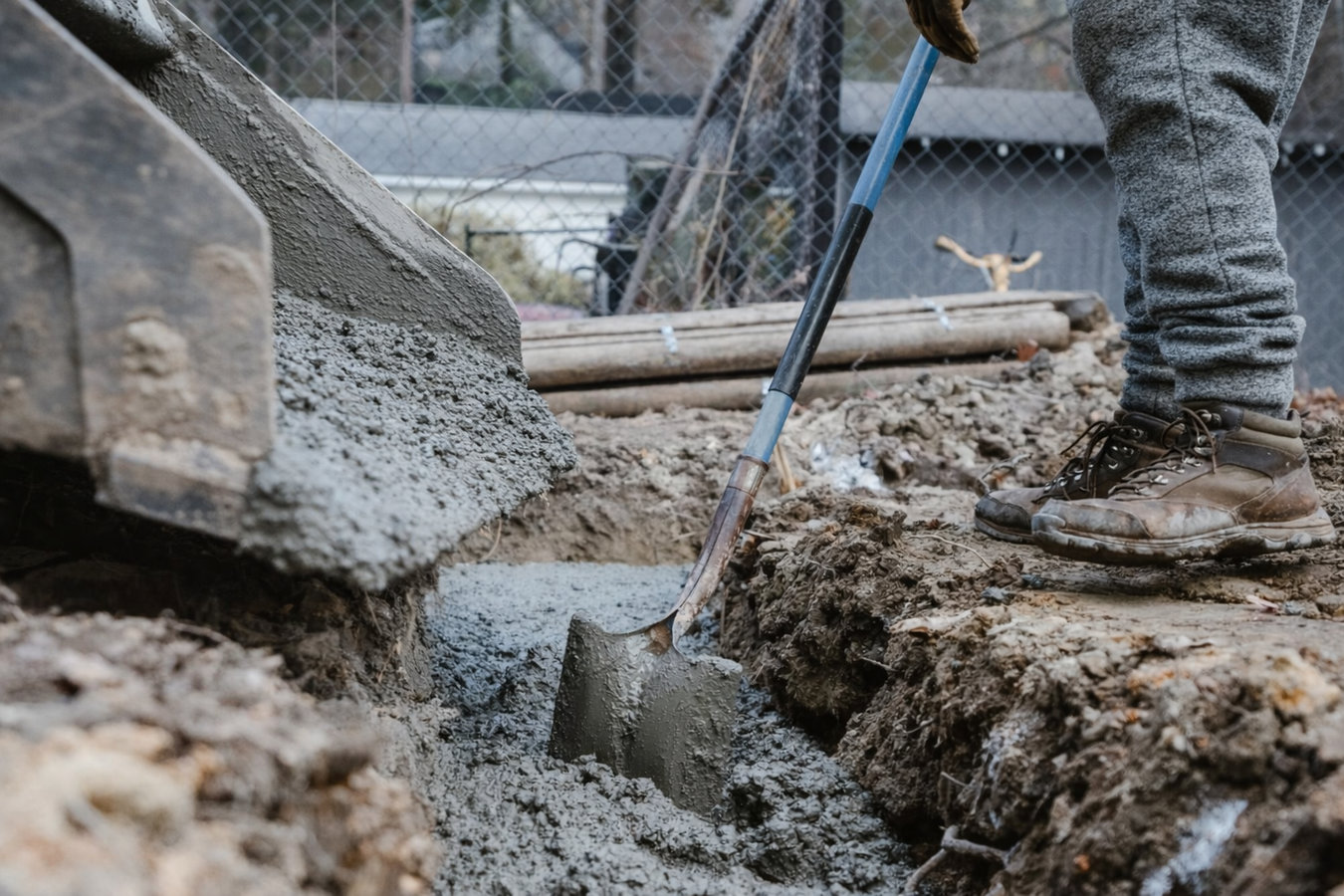
We pour concrete footings for decks, additions, detached garages, porches, and other residential structures. Every job starts with a site visit to assess access and soil conditions, because what the crew finds when they start digging - rock, unstable ground, high water table - affects the approach and the price. We dig to the 48-inch frost line required by Hudson's building code, set forms, and place steel reinforcement where the load or soil conditions call for it. We also handle the building permit and coordinate the pre-pour inspection the town requires, so the project moves forward on record and you are not left managing that paperwork. Our foundation raising service handles situations where a settled foundation needs to be lifted before new footing work can begin - both can often be scoped in the same estimate.
For homeowners replacing footings under an existing structure, the process involves temporarily supporting whatever is above - the deck frame or addition walls - while the old footings are removed and new ones are poured at the correct depth. It is more involved than new construction, but it is the only fix that actually stops the problem. Leaving shallow footings in place means the structure keeps moving. The American Concrete Institute publishes the standards for concrete footing quality and placement that licensed contractors follow for this type of work.
Homeowners building a new deck, addition, detached garage, or porch who need footings poured and inspected before framing begins.
Homeowners with existing decks or additions where footings have shifted or were never poured to the required depth, creating movement in the structure above.
Property owners who need the full permit and inspection process handled by their contractor so the work is on record and passes town review.
Hudson's 48-inch frost line requirement is one of the deepest in the continental United States, and it is non-negotiable for any footing that is meant to stay put. The freeze-thaw cycle here is relentless - temperatures swing above and below freezing repeatedly from November through March, and any base sitting above that line will move with the ground. Southern New Hampshire soil also includes a significant amount of glacial till - a mix of clay, sand, gravel, and boulders left by ancient glaciers - which means crews sometimes hit unexpected rock or unstable patches when digging. Contractors who have not worked in this soil tend to underestimate how often that happens and underprice accordingly. Neighbors in Pelham and Windham share the same glacial soil and frost conditions, and we factor those realities into every estimate across the region.
Hudson grew quickly as a suburb during the 1970s through the 1990s, and a large portion of the town's homes are now 30 to 50 years old. Decks and additions built during that period were sometimes constructed with footings poured shallower than what is required today, and those footings are now showing up as problems for homeowners who are selling, renovating, or simply noticing that their deck is no longer level. Catching this early - before a buyer's inspector does - is almost always the less expensive path.
Reach out by phone or online and we respond within 1 business day. We will ask about what you are building and roughly where on your property it will go to prepare for the site visit.
We come to your property, assess access, soil, and grade, and confirm the scope of work. You receive a written estimate with clear line items before any commitment. In Hudson, a building permit is required before footings are poured, and we handle that process.
Before any digging starts, underground utility lines must be marked through New Hampshire's Dig Safe service. We handle or confirm this step. The crew then excavates to the required 48-inch depth, sets forms, and places any required steel reinforcement inside.
A Town of Hudson building inspector visits before or shortly after the pour to confirm depth and setup meet code. Concrete is then poured and the forms are removed after curing. In normal weather, framing can typically begin within seven days.
We respond within 1 business day, visit your property, and give you a written price before any work begins - no pressure, no obligation.
(603) 471-5233Hudson's frost line sits at 48 inches, one of the deepest requirements in the continental United States. Any contractor quoting a shallower depth is either unfamiliar with local code or cutting corners on your project. We dig to the required depth on every job, and the pre-pour inspection confirms it - so you are not relying on our word alone.
The Town of Hudson requires a building permit and a pre-pour inspection for any footing that supports a structure. We pull the permit, coordinate the inspector's visit, and make sure the project moves forward legally. Unpermitted footing work can complicate a home sale or insurance claim - doing it right from the start protects your investment.
Much of southern New Hampshire, including Hudson, sits on glacial till - a mix of clay, sand, gravel, and boulders left behind by ancient glaciers. When a crew starts digging, they may hit large rock or unstable soil that was not visible from the surface. We have worked in this soil for years and build that variability into how we approach estimates and scheduling.
New Hampshire requires contractors to hold a state license for residential work above a certain dollar threshold, and you can verify ours through the NH Office of Professional Licensure and Certification before signing anything. We also carry current general liability insurance. We encourage every homeowner to check both before hiring anyone for structural work.
Footing work is invisible once the project is complete, which is why the contractor you choose matters more than it might seem. The depth, the mix, the reinforcement, and the permit are all things you cannot check after the fact - but they determine whether your deck is still level and solid five winters from now.
For permit requirements, visit the Town of Hudson Building Department. For utility marking before digging, use NH Dig Safe.
If a settled foundation needs to be lifted and releveled, foundation raising addresses the underlying structural issue that poor footings often cause over time.
Learn MoreFor projects that go beyond footings into a full foundation wall system, we handle new foundation installations for additions and detached structures.
Learn MoreSpring contractor schedules in Hudson fill up fast - locking in your date now means your project starts on time and your build season stays on track.