Loading...
Serving Hudson, NH and surrounding areas. (603) 471-5233
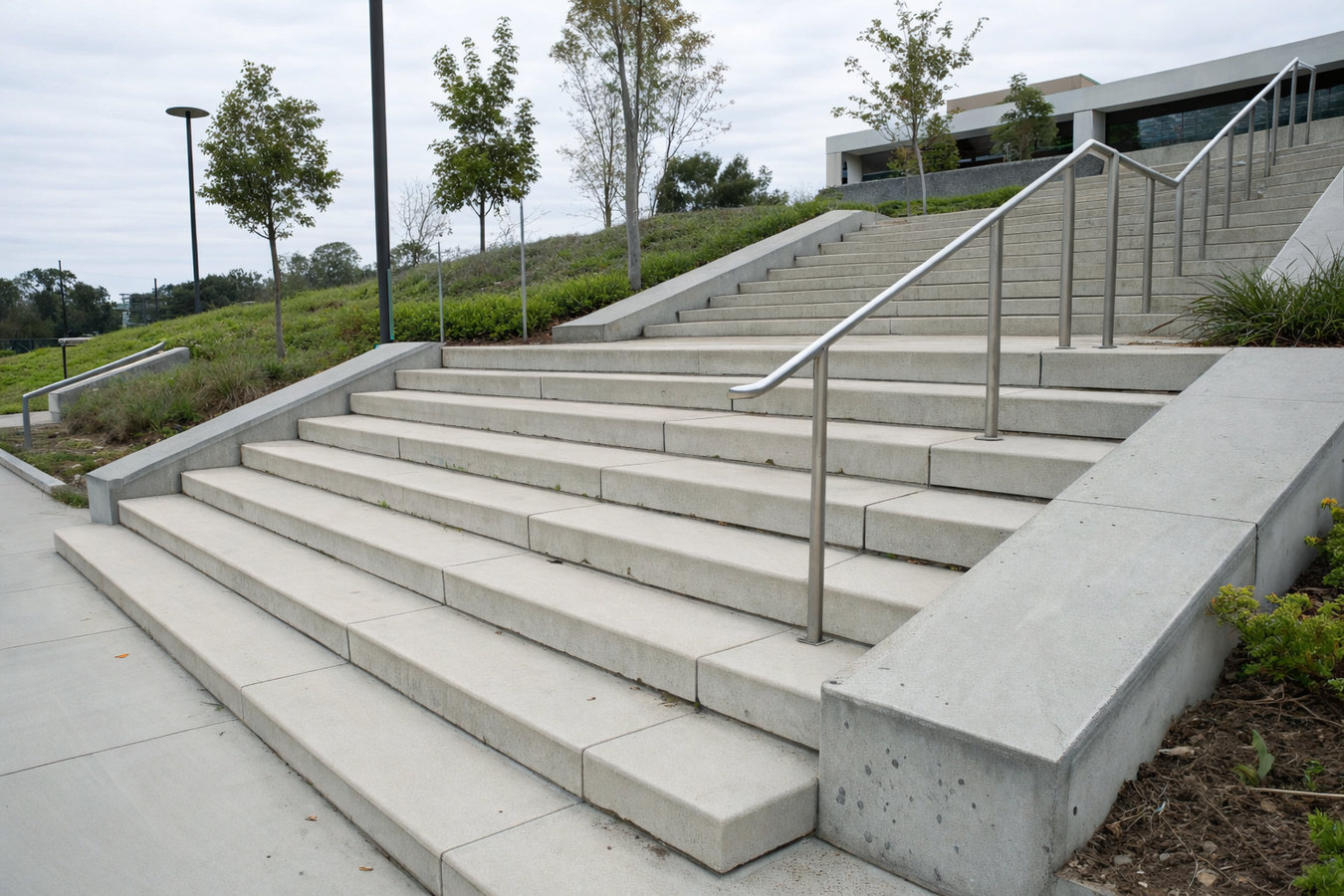
Cracked, shifted, or slippery concrete steps are a safety problem, not just a cosmetic one. We build and replace concrete steps in Hudson that hold up through New Hampshire winters and give your family a safe entry every day of the year.
Concrete steps construction in Hudson, NH covers demolishing and removing old steps, preparing a frost-depth gravel base, and pouring new steps in forms - most front entry replacements are completed in one to two days on-site, with a 24-to-48-hour wait before light foot traffic.
A large share of Hudson's single-family homes were built during the suburban expansion of the 1970s through 1990s. Steps from that era are now 30 to 50 years old and reaching - or past - the end of their natural lifespan. What looks like a surface problem from the street can turn out to be a structural one once a contractor takes a close look. Getting an honest assessment before winter is the right move.
If you are also planning a new walkway from the street to your door, our concrete sidewalk building service pairs naturally with step replacement - same material, same crew, and a cohesive finished entry that eliminates the muddy grass path most Hudson homeowners end up with.
If you notice new cracks appearing each spring, or existing cracks that were small last year are now wider, Hudson's freeze-thaw cycles are actively breaking down the structure. Small surface cracks can sometimes be patched, but cracks that run through a step or follow the edge of the slab usually mean the step is failing from the inside out.
If there is a visible gap between your steps and the house, or if the steps have tilted to one side, the base underneath has moved. This is a safety hazard - a shifted step can catch a foot and cause a fall. In Hudson, this movement is often caused by frost heave, where the ground freezes and pushes upward in winter, then settles unevenly in spring.
A rough, pitted surface that sheds small chips of concrete is called spalling, and it is very common on older steps in New Hampshire. It is often caused by years of rock salt or chemical ice melters combined with freeze-thaw damage. Once spalling starts it tends to accelerate, and a spalled surface is also a slip hazard, especially when wet.
Hudson's main growth period produced a lot of homes with original steps now 30 to 50 years old and approaching the end of their natural lifespan. Even if they look okay from a distance, have a contractor take a close look - steps that feel solid underfoot can still have internal cracking or a compromised base that fails suddenly rather than gradually.
We handle both new concrete steps construction and full replacements for existing steps. Replacements start with demolition and removal of the old concrete, then base preparation to the correct frost depth, forming, reinforcement placement, and a fresh pour. New installations - for additions, finished basements, or grade changes - follow the same process from the ground up. Every project includes a properly sloped tread surface so water drains off the steps rather than pooling and freezing where people walk.
We can also coordinate steps with other concrete work on your property. If your new steps lead to a slab foundation or a new concrete entry platform, handling both in one project ensures the materials, drainage, and joint placement work together correctly from the start.
Homeowners with structurally failed steps - shifted, cracked through, or pulled away from the foundation - where repair is not a lasting solution.
Homeowners adding steps to a new addition, finished basement entry, garage, or backyard grade change where no steps currently exist.
Any homeowner who wants a safe, low-maintenance finish that provides grip year-round without requiring decorative coatings or frequent upkeep.
Hudson sits in USDA Hardiness Zone 5b-6a, and frost heave is one of the most common reasons steps pull away from foundations here. The ground can freeze to 48 inches or more in a hard winter, and any base that does not go deep enough will move with it. When that happens every year, the steps shift a little further from the house with each freeze-thaw cycle until they become a genuine trip hazard. Concrete mixed for cold climates and set on a base prepared to the correct depth is what stops that pattern before it starts.
The Merrimack River floodplain areas of Hudson also have soils that can be softer and more prone to settling, which makes proper base compaction even more critical on those properties. We also work with homeowners in nearby Nashua and Merrimack, where the same frost depth and soil conditions create the same problems for aging front entry steps.
Reach out by phone or the contact form and we will respond within 1 business day. We will ask a few questions about your existing steps to prepare for the site visit.
We come to your property, measure the existing steps, check the base and foundation connection, and walk through the scope with you. You get a written quote that spells out every cost - demolition, hauling, base prep, pour, and finish.
The crew breaks out the old steps and compacts a gravel base below Hudson's frost depth. This base prep is the most important part of the job - it is what keeps your new steps from shifting over time.
Forms are set, reinforcement is placed, and concrete is poured and textured in one session. You can walk on the steps in 24 to 48 hours for light foot traffic. Full cure takes about 28 days.
We respond within 1 business day. Free written estimate, no obligation, and we can check whether your project needs a permit before work starts.
(603) 471-5233Hudson's frost depth means the base under your steps needs to go deep enough that ground movement in winter cannot push the slab. We prepare every base to the correct depth for this climate so your new steps do not pull away from the house after the first hard winter.
New Hampshire requires residential contractors to be licensed through the state, and we encourage every homeowner to look us up before signing anything. You can verify license status through the NH Office of Professional Licensure and Certification in about two minutes. We hand over our license number without hesitation.
Slippery steps are a genuine hazard when Hudson gets its first ice storm in November. We finish every set of steps with a broom texture that gives shoes and boots grip even when the surface is wet. A smooth finish looks polished but is not appropriate for an outdoor entry in this climate.
Many Hudson homes were built in the 1970s through 1990s, and replacement steps that look out of proportion stick out immediately. We take the time to match the width, riser height, and surface finish to what fits your home - so the new steps look like they belong there.
The American Concrete Institute publishes standards for concrete mix design, reinforcement, and cold-weather construction that guide how steps should be built in climates like New Hampshire's. Working to those standards is not a differentiator - it is the baseline. What sets a reliable local contractor apart is consistently applying them on every project, regardless of size.
If your steps connect to a slab-on-grade foundation, we can address both the foundation and entry steps in a single coordinated project.
Learn MorePair new front entry steps with a matching concrete sidewalk from the street to your door for a finished, cohesive entry.
Learn MoreHudson's concrete window runs late April through October - crews book out fast once warm weather arrives, and cracked or tilting steps only get worse through another winter.