Loading...
Serving Hudson, NH and surrounding areas. (603) 471-5233
Sloped lots lose soil every spring. A properly built concrete retaining wall keeps your yard, driveway, and foundation where they belong.
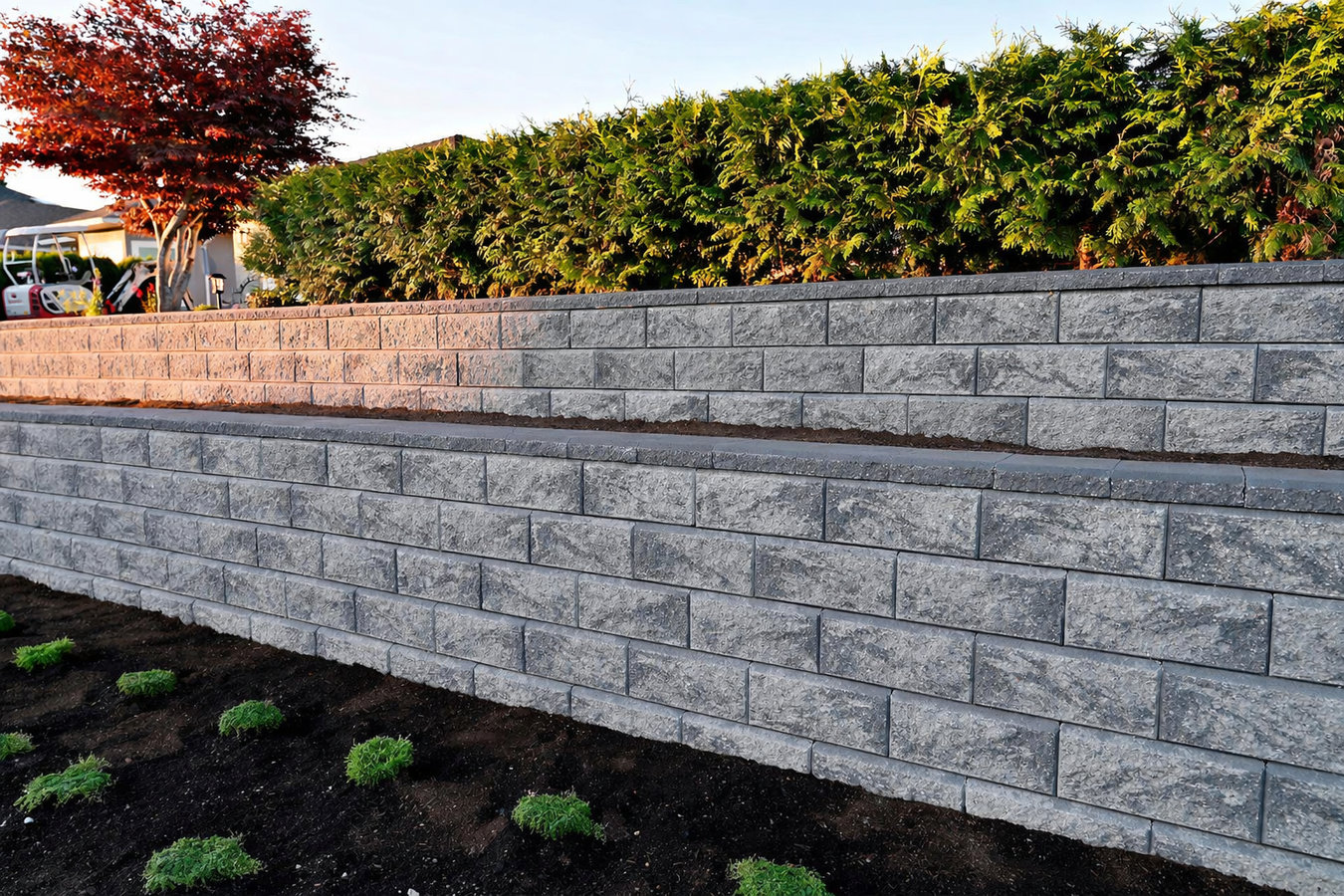
Concrete retaining walls in Hudson hold back soil on sloped lots, prevent erosion, and create level usable space, with most residential jobs taking two to five days to complete. A wall without proper drainage will eventually fail, so every project we build includes gravel backfill and a drain pipe behind the wall.
Many Hudson homeowners call us after noticing soil washing down a hillside each spring or an old timber wall starting to lean. If that sounds familiar, the fix is usually more straightforward than you expect. For yards where a flat entertaining space is the goal, our concrete patio construction service pairs naturally with a retaining wall to give you both structure and usable outdoor space.
Hudson sits in a climate zone where the ground freezes roughly four feet deep in hard winters. That frost depth shapes every wall we build here, from the footing depth to the drainage design. Getting those details right on day one is the difference between a wall that lasts 50 years and one that shifts after the first hard winter.
If you see bare patches, ruts, or sediment collecting at the base of a slope after rain or spring snowmelt, the ground is moving more than it should. In Hudson, that kind of erosion tends to get worse each year without intervention.
A retaining wall tilting away from the slope is under stress it cannot handle. Horizontal cracks or gaps opening between sections are signs the wall is losing ground. New Hampshire freeze-thaw cycles accelerate the movement once it starts.
When a slope does not drain properly, water collects against the foundation. Over time that moisture can enter your basement or crawl space. A retaining wall with built-in drainage redirects the water before it becomes a foundation problem.
Many Hudson homes built in the 1970s and 1980s have original wood retaining walls now past their lifespan. If the wood is soft, crumbling, or the wall has started to lean, it is no longer doing its job. Replacing it with concrete gives you a wall that will not need to be rebuilt in another 20 years.
We build poured concrete walls and concrete masonry unit (block) walls depending on your site, budget, and aesthetic. Every wall includes properly sized footings set below the frost line, granular backfill, and a perforated drain pipe so water has somewhere to go. For properties where level outdoor living space matters, our work often connects to concrete floor installation in lower-level spaces or garages that benefit from the same drainage improvements.
For homeowners who want good drainage paired with solid structural footing work underneath outbuildings or additions, we also handle concrete footings as a standalone service. Whether your project is a single short wall or a terraced system on a steep slope, we size the scope to your property and your goal.
Best for homeowners who want maximum strength and a clean, modern finish on walls over three feet tall.
A practical choice for walls under four feet where access is tight or a more textured appearance is preferred.
Ideal for older Hudson properties with original wood walls that have reached the end of their life.
For steep slopes where a single tall wall would require heavy engineering, stepped terraces distribute the load and create usable planting areas.
Hudson is a hilly community with a mix of 1960s through 1990s split-level and raised ranch homes built on sloped lots. Many of those properties have original timber or block walls that are now 30 to 50 years old. New Hampshire winters deliver repeated freeze-thaw cycles, and spring snowmelt can saturate the soil behind a wall quickly. Walls with poor drainage are most likely to show movement or cracking in March and April, and once they start moving they rarely stop on their own. Homeowners in Windham face the same hilly terrain and know exactly what we mean.
Hudson also sits on a mix of glacial till, sandy loam, and ledge rock, a legacy of the last ice age that shaped southern New Hampshire. Sandy soils drain well but do not hold slopes as firmly; ledge rock close to the surface can make excavation more involved. A contractor who does not assess your specific soil before quoting is guessing, and that guess can cost you later. We serve homeowners across Hudson and throughout Pelham, where similar slope and soil conditions are common.
Call or fill out our contact form. We reply within one business day and ask a few quick questions about your slope, your access, and what you are hoping to accomplish so we can come prepared.
We walk your property, measure the area, look at soil conditions and drainage patterns, and factor in site access. You receive a written estimate that covers labor, materials, drainage, and permit costs with no hidden line items.
If your project needs a Town of Hudson building permit, we handle the application. Once approved, we schedule the work. Excavation is the noisiest part of the job. In Hudson, footings go deep enough to clear the frost line, so expect significant digging on day one.
The wall goes up with gravel backfill and drain pipe installed behind it as construction progresses. Most residential walls are complete within two to five working days. We restore rough grading before we leave and coordinate the final town inspection if one was required.
Free on-site estimate. Written quote before any work begins. No pressure.
(603) 471-5233Hudson's ground freezes up to four feet deep in hard winters. Every wall we build has footings set below that depth, because a wall that heaves after the first hard frost is not a wall at all. We do not negotiate on this step.
Hudson requires permits for most residential retaining walls, and an unpermitted wall can complicate a home sale years down the road. We handle the application, coordinate the inspector, and make sure the record is clean before we close out the job.
Water pressure behind a wall is the leading cause of early failure. We install granular backfill and a perforated drain pipe as part of every build, not as an add-on. The American Concrete Institute documents why proper drainage is critical to wall longevity.
Hudson sits on a mix of glacial till, sandy loam, and ledge rock. A contractor who has not worked in this specific mix may underbid the excavation and leave you with a change order. We assess your site before quoting, so the number you agree to reflects the actual conditions.
When you combine frost-depth footings, proper drainage, and permit compliance, you get a wall that performs through New Hampshire winters for decades. That is the standard we hold every retaining wall project to, from a small yard wall to a full terraced system.
You can verify contractor registration through the NH Office of Professional Licensure and Certification. Hudson-specific permit requirements are confirmed through the Town of Hudson Building Department.
New or replacement concrete floors for garages, basements, and interior spaces, poured with proper drainage slope and freeze-thaw resistant mix.
Learn MorePoured concrete footings sized and set below Hudson's frost line to support additions, outbuildings, decks, and structural columns.
Learn MoreSpring books fast in southern New Hampshire. Reach out now to hold your spot before the season fills up.